Rates And Fees
PN
Priya Nadar
Personal Finance Editor · Updated July 2026

Priya Nadar
Personal Finance Editor · Updated July 2026
Imagine you are sitting at your kitchen table, looking at a loan offer for $5,000 to cover an unexpected car repair. The lender tells you the interest rate is 10%, which sounds manageable compared to most credit cards. However, when you look closer at the fine print, the actual cost of borrowing—the APR—is closer to 14%. This discrepancy is where many borrowers find themselves caught off guard, often realizing too late that they are paying significantly more than their monthly budget anticipated. Understanding the difference between a simple interest rate and the total cost of credit is perhaps the most vital skill for any borrower in 2026.
In this guide, we will demystify how lenders calculate these costs so you can make an informed decision rather than a rushed one. We will explore why APR is the gold standard for comparison, identify the specific fees that might sneak into your contract, and provide you with a framework to evaluate any offer you receive. Whether you are looking for a small personal loan or a larger consolidation tool, knowing these numbers allows you to maintain control over your financial future.
In 2026, the landscape of consumer lending remains complex. While interest rates can fluctuate based on economic shifts from the Federal Reserve, individual terms will always depend on your unique credit profile and the specific lender's risk assessment. Generally, APR ranges for personal loans can vary widely, often spanning from 6% to 36% or more. Typical loan amounts range from as little as $500 to upwards of $50,000, and while some digital lenders may offer decisions in minutes, the actual funding timeline can vary based on your documentation. This article is designed to ensure you understand exactly what those numbers mean before you sign any agreement.
One of the most common points of confusion in personal finance is the difference between the nominal interest rate and the Annual Percentage Rate (APR). While they sound similar, they represent very different things. The interest rate is simply the cost you pay to borrow the principal amount; it is the percentage used to calculate your monthly interest charge. However, the APR is a much more comprehensive number that includes both the interest rate and any mandatory upfront fees required to secure the loan.
For example, if you take out a $5,000 loan with a 10% interest rate, but the lender charges a $250 origination fee, your APR will be higher than 10%. This is because the APR reflects the 'true' cost of the money over the life of the loan. If you are comparing two lenders, one might offer a lower interest rate but charge much higher fees, making their APR actually higher than a competitor with a slightly higher base rate. Always use the APR as your primary comparison tool to ensure you are getting the best deal.
Lenders are required by law to provide these disclosures clearly under the Truth in Lending Act. This means they cannot hide these costs in small print that is impossible to read. However, even with clear disclosures, it is easy for a borrower to focus solely on the monthly payment amount rather than the total cost of credit. A lower monthly payment often implies a longer term or a higher APR, both of which can lead to paying thousands more in interest over time.
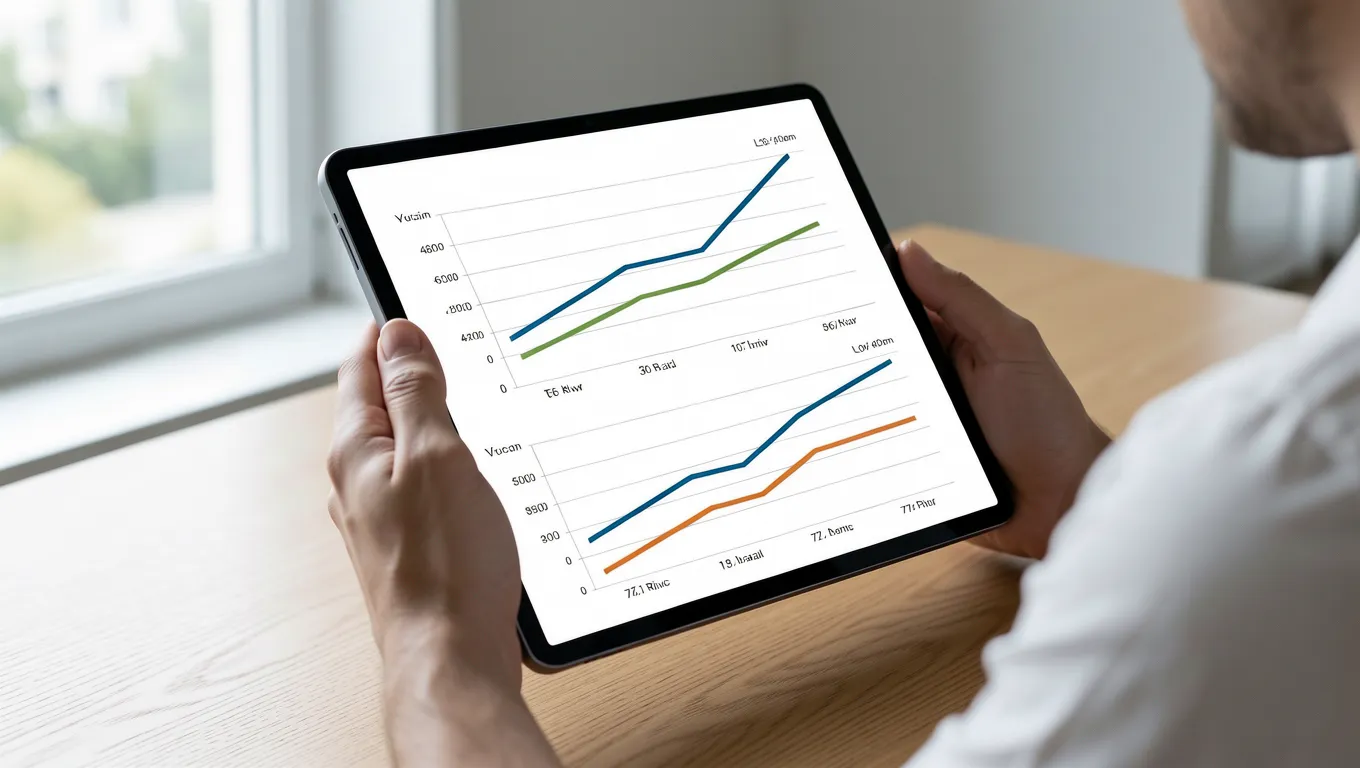
To truly grasp how rates and terms interact, it is helpful to see the math in action. Let's look at three different scenarios for a borrower looking to secure funds.
Comparing Scenario B and C shows a vital lesson: even though the monthly payment in Scenario C might feel manageable, the total cost relative to the principal is much higher. When evaluating an offer, don't just look at what leaves your bank account every month; look at the total amount repaid by the end of the term. This comparison helps you see the long-term impact of interest rates on your net worth.
While APR covers most things, there are specific fees that can still catch you by surprise if you aren't looking for them. The most common is the origination fee, which is a one-time charge taken out of your loan proceeds. If you request $10,000 but see only $9,500 in your bank account, it is likely because an origination fee was deducted upfront.
Another critical area to investigate is the prepayment penalty. Some lenders include clauses that charge you a fee if you decide to pay off your loan early. This might seem counterintuitive—why would a lender punish you for being responsible? However, they do this to ensure they receive the interest they expected from you. Always verify whether your loan has prepayment penalties before signing; in many cases, modern personal loans allow you to pay off debt early without any additional cost.
Additionally, keep an eye out for:
When selecting a loan, you will often be presented with two choices: a fixed-rate or a variable-rate structure. A fixed-rate loan offers the security of knowing that your interest rate and monthly payment will never change for the entire duration of the loan. This is ideal if you are on a strict budget and want to avoid market volatility.
On the other hand, a variable-rate loan has an interest rate that can fluctuate based on changes in benchmark rates, such as those set by the Federal Reserve. Variable rates often start lower than fixed rates, which can be attractive for short-term borrowing. However, if market rates rise, your monthly payment could increase significantly, potentially creating financial strain you didn't plan for.
Here is a quick comparison of the two strategies:
| Feature | Fixed Rate | Variable Rate |
|---|---|---|
| Predictability | High - Monthly payments stay the same. | Low - Payments can change over time. |
| Initial Cost | Typically higher at the start. | Often lower than fixed rates initially. |
| Risk Level | Lower risk in a rising rate environment. |
It is important to understand that there is no such thing as a 'standard' interest rate. Every lender uses a complex algorithm to determine your risk level, and this calculation is heavily influenced by your credit profile. Agencies like Experian or Equifax provide data that lenders use to decide whether you are likely to repay the loan on time.
A borrower with an excellent credit score (often 740+) will typically qualify for the lowest interest rates available in the market. Because they represent a low risk, lenders are willing to offer them more competitive terms to win their business. Conversely, if your credit history is thin or contains past delinquencies, you may be offered higher APRs to compensate the lender for the increased risk of default.
It is also worth noting that even with a great score, other factors come into play. Your debt-to-income (DTI) ratio—the amount of your monthly income that goes toward paying existing debts—is a massive factor. If you have high interest rates on several credit cards, a lender might view you as higher risk regardless of your score. This is why many people use personal loans for debt consolidation; by using a lower-interest loan to pay off high-interest cards, you can eventually improve both your DTI and your overall credit standing.
To avoid the temptation of simply choosing the lowest monthly payment, follow this decision framework when comparing multiple loan offers in 2026:
By following this structured approach, you move from being a passive recipient of loan terms to an active, informed consumer. Remember that PaydaySeek is just one resource among many used to find potential matches; the final decision always rests on your careful review of individual lender disclosures.
Borrowers weighing this choice often look at bad credit loans and payday loans for bad credit as well.